
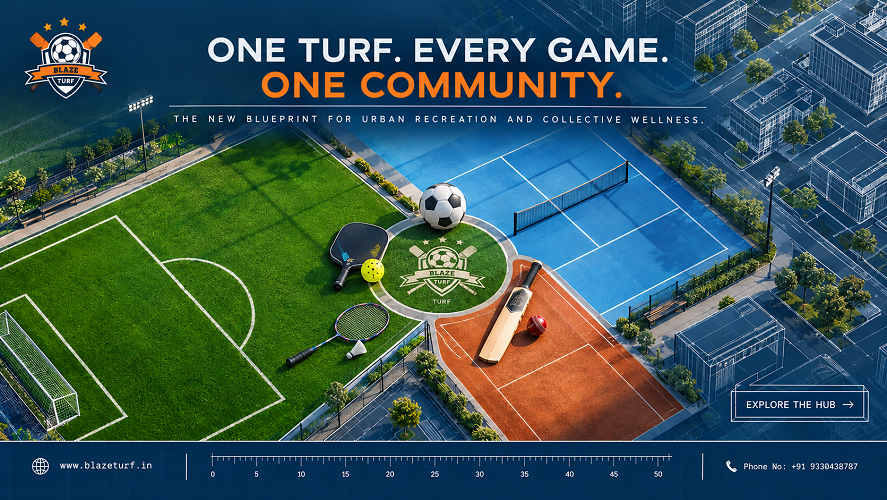
A sports venue used to be fairly simple. You went there to play, got sweaty, argued about a close call, packed up and went home.
That model is changing.
In crowded cities, where open spaces are harder to find and everyone seems to be juggling work, school, traffic and three WhatsApp groups about weekend plans, professionally managed multi-sport venues are becoming something more useful. They are turning into places where people actually spend time together.
And that matters.
Think about a typical Saturday evening. One group is playing football. A family has booked badminton. Two friends are trying pickleball for the first time while someone nearby is setting up a cricket game. Different ages. Different skill levels. One shared environment.
That is not just a sports facility anymore.
It is a community hub with a scoreboard.
The problem with urban recreation
Cities have plenty of people who want to be active. What they often lack is an easy place to do it.
A neighbourhood may have a small park, but it is rarely equipped for several sports. A traditional club may focus on one activity. Gyms handle fitness, but they do not necessarily create much interaction between strangers or different generations.
Then there is the practical headache.
You finish work late, spend 45 minutes getting home and suddenly travelling across the city for a game feels like an unnecessary expedition. Most people are not looking for another complicated commitment. They want something they can actually fit into their lives.
That is where multi-sport venues make sense.
One place, more reasons to show up
Football, cricket, badminton and pickleball attract different kinds of players. That variety is the point.
Someone who does not fancy a full football match might happily play badminton for an hour. A family may choose one court while friends organise a cricket session. A young professional who has never touched a paddle before might discover pickleball because a colleague dragged them along.
That first visit can lead somewhere.
You meet people. You return. Someone brings another friend. Soon, the venue has its own small network of regulars.
We underestimate how valuable that can be.
Sports create an unusually easy reason for people to interact because nobody has to manufacture the conversation. You already have something to do.
From playing to belonging
This is where professionally managed sports infrastructure becomes more interesting.
Facilities such as Blaze Turf show how one venue can bring different sporting interests into the same ecosystem, giving families, weekend players, working professionals and regular sports groups a common place to meet.
The benefit isn’t only convenience.
It is participation.
When recreation becomes easier to access, more varied and more social, people have fewer excuses to remain spectators in their own neighbourhoods.
And yes, some days you will play terribly. Your badminton partner will remind you about it for weeks. That is part of the deal.
A good community does not require everyone to be brilliant.
It just needs people to keep showing up.
That may be the bigger shift happening in urban recreation: sports venues are no longer being defined only by what happens inside the playing area. They are increasingly being judged by what happens around it, between games, across age groupsand among people who might otherwise never have met.
The next generation of urban sports spaces may not look like traditional playgrounds at all.
They may look more like places where a city learns how to play together.