
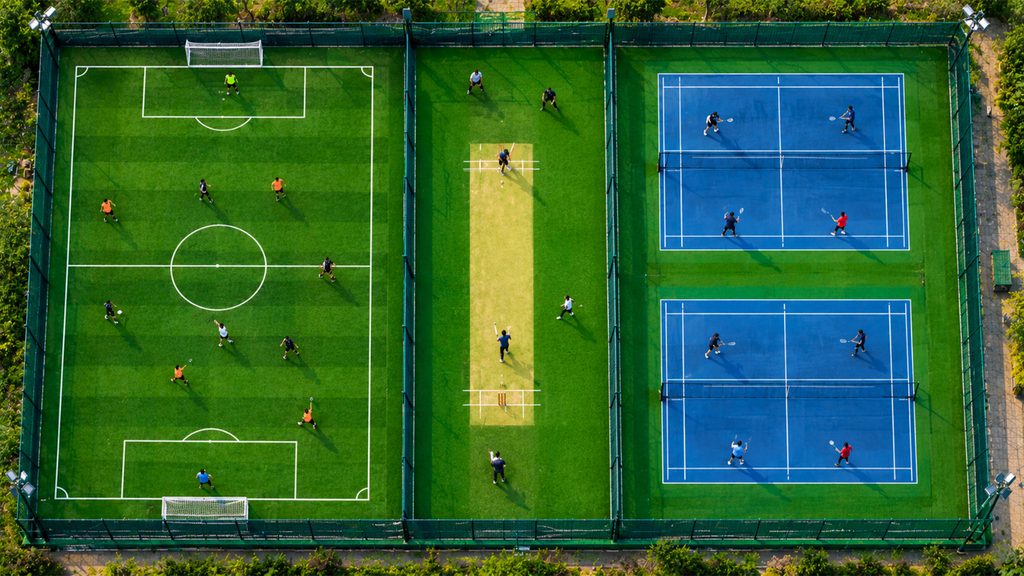
Playing different sports can break the monotony of everyday life, channel pent-up energy into healthy competition and make fitness more exciting. From the intensity of football and cricket to the speed of badminton and pickleball, recreational sports give working professionals and friend groups a reason to move, compete, connect and rediscover the thrill of playing. The right sporting routine turns exercise into an experience people want to return to.
When the Workday Ends, Let the Real Game Begin
Another deadline met. Another meeting finished. Another day spent answering messages, solving problems and keeping everything on track. By evening, the mind is crowded, the body has barely moved, and the promise of doing something for yourself has once again been pushed to tomorrow.
But not everyone wants to spend the evening sitting back and switching on another screen. Some people want speed. Some want sweat. Some want a challenge that demands every ounce of their attention.
They want the ball at their feet, the bat in their hands, the next shot coming fast. They want to run harder, react quicker and compete with people who know exactly how to push their buttons.
That is the pull of recreational sport. It replaces the endless mental noise of the day with a challenge that exists in the moment. There is no email to answer when you are chasing a loose ball. No meeting agenda when you are trying to win the next point. There is only the game, your teammates and the opponent who is determined to beat you.
Sport does not make everyday responsibilities disappear. It gives you something different to focus your energy on, something physical, immediate and entirely your own.
Fitness Feels Different When There Is Something to Win
Exercise and sport can both keep people active, but the experience is not the same. A workout may be built around repetitions, sets and targets. A game gives those movements a purpose beyond the movement itself.
You sprint because the defender is closing in. You react because the ball is coming at you. You push for one more rally because losing that point is not an option. The effort becomes part of the contest, and the contest gives you a reason to keep going.
That competitive instinct can make recreational activity more engaging. It also adds an emotional dimension to fitness. There is the frustration of a missed shot, the satisfaction of a well-timed move, the rush of a comeback and the pride of winning a close game.
Not every session needs to be a battle, and players should still respect their fitness levels and allow time for recovery. But when movement is tied to a game you genuinely enjoy, staying active can feel less like a duty and more like a personal ritual.
The real advantage is not simply burning energy. It is having an activity you look forward to, even after a demanding day.
One Favourite Sport Is Good. A New Challenge Can Be Even Better.
Playing the same sport regularly can build skill, confidence and a strong sense of belonging. Yet trying another activity can bring fresh motivation when a routine starts to feel predictable.
Different sports challenge players in different ways. Football demands movement, awareness and quick decisions. Cricket combines timing, anticipation and tactical thinking. Badminton rewards agility, reflexes and precise shot placement. Pickleball brings its own mix of fast exchanges, positioning and controlled aggression.
Switching between sports gives players new skills to learn and new weaknesses to work on. The person who dominates a football match may find themselves struggling to read a badminton rally. The confident cricket player may need patience and practice to master a racket sport.
That is part of the attraction. Being a beginner again can be refreshing. You have something to learn, progress to make and a new reason to show up.
Football and futsal for players who thrive on intensity
Football is built for people who enjoy pace, teamwork and the pressure of a changing game. One moment you are defending, the next you are sprinting into space. A single goal can change the mood of the entire match.
Futsal offers a related but distinct challenge, with a smaller playing area and a different rhythm. For players who enjoy quick decisions and close control, it can bring a fresh edge to familiar competition.
Those looking for variety can also explore cricket, badminton or pickleball. Each requires a different approach, giving players an opportunity to test themselves beyond their usual strengths.
Cricket and box cricket for players who love the contest
Cricket has its own tension. A batter waits for the delivery. A fielder watches for the smallest mistake. Every run can matter when the score is close.
Box cricket brings that competitive spirit into a compact recreational format, making it an option for groups who want to play together. Football provides a more continuous, movement-driven contest, while racket sports introduce quicker exchanges and different tactical demands.
Trying another sport does not dilute a passion for cricket. It adds another way to compete, learn and enjoy time with a group.
Badminton and pickleball for speed, precision and quick reactions
Racket sports reward players who can read the situation quickly and execute under pressure. A well-placed shot can open up the court. A sharp return can turn defence into attack in seconds.
Badminton and pickleball offer different playing experiences, but both give recreational players opportunities to develop coordination, anticipation and control. They can also be a natural starting point for people who want a new challenge without immediately joining a larger team sport.
The important thing is to choose an activity that excites you enough to learn it properly. The first game may expose what you cannot do yet. The next gives you a reason to improve.
The Best Rivalries Often Begin With Friendship
Ask a group of friends to play a casual match, and the plan may sound simple enough. Everyone is there to have fun. Nobody is taking it too seriously.
Then someone scores.
Suddenly, the banter gets sharper. A missed chance becomes a topic of debate. The person who said they were playing just for fun starts demanding the ball. Every point matters a little more than it did five minutes ago.
That transformation is one of sport’s great pleasures. The arrogance is playful, the confidence is loud, and the determination to win is real. Friends become opponents without becoming enemies. The match ends, the jokes return, and someone inevitably asks when the rematch is happening.
These shared moments are a powerful reason to make sport part of a social routine. A game gives friends something to experience together, not just another occasion to sit and talk. It gives colleagues a chance to meet beyond job titles and gives new players a natural way to connect with a group.
Multi-sport activities widen those possibilities. A group does not have to agree on one favourite game forever. They can play football one week, try cricket another time and discover a racket sport together. The activity changes, but the shared competitive spirit remains.
Turn an Ordinary Weekend into Something Worth Looking Forward To
A weekend can disappear quickly between errands, screen time and plans that never quite happen. A game gives the day a centrepiece. There is a time to meet, a team to gather and something to play for.
For some groups, that means a high-energy football match. For others, it may be box cricket, badminton or pickleball. The right mix depends on who is playing, what everyone enjoys and how much time they have.
A varied routine can help sustain interest. Keep a favourite sport as the regular fixture, then introduce a different activity when the group wants a new challenge. Beginners can start at a comfortable pace, while more experienced players can look for organised games or tournaments that give them a sharper competitive goal.
Consistency matters more than making every session intense. Players need suitable preparation, hydration, rest and a realistic sense of their own ability. The aim is to build a sporting habit that brings energy into life, not another source of pressure.
When the game becomes something people anticipate during the week, the routine starts working in their favour. The group chat has a purpose. The weekend has a plan. And the next match is already taking shape before the last one has been forgotten.
Make Space for the Side of You That Wants to Compete
Work and daily responsibilities often reward patience, control and the ability to keep going. Sport gives people a different outlet. It allows them to test their reactions, express their competitive side and focus on a challenge that is decided one play at a time.
For working professionals, that can make an evening game a welcome break from the workday. For recreational players, it can bring a renewed sense of movement and progress. For friends, it can turn an ordinary get-together into a contest full of energy, laughter and bragging rights.
The answer is not necessarily to play harder every time. It is to make room for an activity that brings you alive. Some days, that means learning a new skill. Others, it means chasing a win against the people who know you best.
A good sporting routine should leave room for both.
Where Different Sports, Competitive Energy and Community Meet
The right sporting environment makes it easier to turn that intention into action. Players need a place to meet, a suitable space for the game and opportunities to return with friends or explore something new.
In Kolkata, Blaze Turf brings football and futsal, box cricket, badminton and pickleball together within its multi-sport offering. Its round-the-clock operations, membership options and support for organised matches and tournaments provide ways for individuals and groups to make sport part of their routines.
The appeal is not limited to the activity itself. It is in the energy that builds when a group arrives, teams take shape and a friendly game becomes fiercely competitive. It is in the determination to win the next point, the celebrations after a goal and the promise of settling the score in the next match.
For someone leaving behind a long workday, it can mean trading mental fatigue for an hour of active engagement. For a group of friends, it can mean discovering that their quietest teammate has the fiercest competitive streak. For someone exploring a new sport, it can be the beginning of a habit that brings movement and connection into the week.
Sport gives people a reason to push, play and return. Sometimes, that is exactly what a routine needs.
Bring your people. Pick your game. Play with fire. And when the match is over, start planning the next one.